-
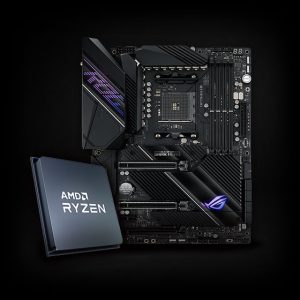
 All listed chipsets (A320, B450, X570, B550) use the AM4 socket and are compatible with Ryzen 1000-5000 CPUs, but require a BIOS update for newer processors, especially on older A320 and B450 boards. A320 is the most budget-oriented and lacks features like overclocking, while B450 is older with fewer features like PCIe 3.0. B550 and X570 are more modern and offer features like PCIe 4.0, with B550 generally offering a good balance of price and performance and X570 being the high-end option.
AM4 (A320, B450, X570, B550) Motherboard AMD Ryzen 1000–5000
AED3,400.00 -
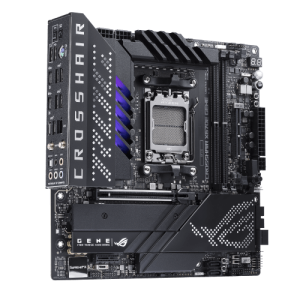
AM5 motherboards for Ryzen 7000+ CPUs use the new AM5 socket and come with chipsets like B650, X670, and X670E, which offer key features such as DDR5 support and PCIe 5.0 for next-generation storage and graphics. B650 boards are a more affordable option, generally focused on features like PCIe 4.0, while X670 and X670E are aimed at high-end users needing more extensive connectivity and PCIe 5.0 support for both graphics and NVMe SSDs.
AM5 (B650, X670, X670E) Motherboard AMD Ryzen 7000+
AED3,700.00 -
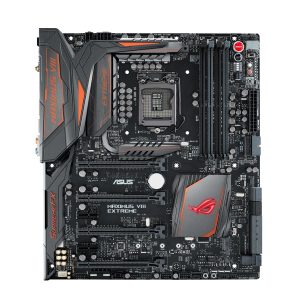
LGA 1151 v2 motherboards with the Z370 and Z390 chipsets are designed for Intel 8th and 9th Gen Core processors, featuring support for DDR4 memory, multiple expansion slots (PCIe), and fast connectivity options like USB 3.1 Gen 2 and M.2 slots. The key difference is that the Z390 chipset is a newer design that specifically adds support for the 9th Gen processors without a BIOS update, while the Z370 chipset typically requires a BIOS update to work with 9th Gen CPUs.
LGA 1151 v2 (Z370, Z390) Motherboard Intel 8th/9th Gen
AED2,890.00 -
LGA 1200 motherboards with Z490 and Z590 chipsets are designed for 10th and 11th Gen Intel Core processors, offering features like DDR4 memory support and overclocking capabilities. Z590 motherboards have a key advantage over Z490 by providing direct support for PCIe 4.0 from the chipset, while Z490 typically requires a BIOS update to enable PCIe 4.0 with an 11th Gen CPU. Both chipsets offer next-generation connectivity, including multiple M.2 slots and USB 3.2 Gen 2x2 Type-C ports.
LGA 1200 (Z490, Z590) Motherboard Intel 10th/11th Gen
AED3,200.00 -
LGA 1150 motherboards with chipsets H81, B85, Z87, and Z97 support Intel 4th and 5th Generation Core i7, i5, i3, Pentium, and Celeron processors. These boards use DDR3 RAM and feature integrated Intel HD 4600 graphics on compatible CPUs. The higher-end Z-series chipsets, like the Z97, offer more features like M.2 support and greater overclocking potential compared to the entry-level H81 and B85 chipsets.
LGA1150 (H81, B85, Z87, Z97) Motherboard Intel 4th/5th Gen
AED2,300.00 -
LGA 1151 motherboards with H110, B150, Z170, and Z270 chipsets support both 6th and 7th generation Intel Core processors, but compatibility may require a BIOS update for 7th gen on older boards. The chipsets differ significantly in features: Z270 is the top-tier, offering the most overclocking support, and the most USB and SATA ports, while H110 is the most basic and entry-level, with limited ports and features. B150 and Z170 are mid-range chipsets that fall between these two extremes.
LGA1151 (H110, B150, Z170, Z270) Motherboard Intel 6th/7th Gen
AED2,000.00 -
LGA 1700 motherboards (B660, Z690, Z790) are compatible with Intel 12th, 13th, and 14th Gen CPUs, but older chipsets like Z690/B660 require a BIOS update to support 14th Gen processors. Key differences lie in features like overclocking support (Z-series), PCIe lane support ( PCIe 5.0 on some Z790 and B660/B760 models), and connectivity options, with Z-series and newer B760 boards generally offering more high-speed USB ports and faster Wi-Fi.
LGA1700 (B660, Z690, Z790) Motherboard Intel 12th/13th/14th Gen
AED2,780.00



 No products in the cart.